

Range changes in Irish dragonflies and damselflies
Following directly on from the draft status assessment project, BioSpatial Insights was commissioned by the Centre for Environmental Data and Recording (CEDaR) to undertake the most statistically rigorous analysis of range changes in Irish dragonflies and damselflies (Odonata) to date. The study assessed distributional trends in 24 resident species over a 50-year period (1975–2024), using multiple complementary modelling approaches to account for the biases inherent in volunteer-collected biodiversity data.
Analytical approach
Four methods were applied at hectad (10 km × 10 km) resolution, with the results compared across all species to build confidence in the conclusions:
Telfer's Change Index – used during exploratory analysis to screen for candidate species showing likely change, comparing two time periods (1975–2003 and 2004–2024).
Reporting Rate Models – estimated changes in the probability of detecting a species within a hectad over time, using binomial models with filters on list length and visit frequency to reduce bias.
Frescalo – estimated changes in relative hectad occupancy across four time periods, adjusting for recorder effort using locally common benchmark species. Uncertainty was quantified using 100 Monte Carlo simulated trend line ensembles, categorised to indicate the direction and strength of any trend, following the approach developed for the Plant Atlas 2020.
Occupancy Models – the most powerful approach, using Bayesian hierarchical models run via Markov Chain Monte Carlo methods to simultaneously estimate true occupancy probability and detection probability, allowing robust inference of range change despite variable detection rates. Models were run with up to 20,000 iterations per species to achieve convergence.
All analyses were implemented in R, with substantial data preparation and processing in PostgreSQL.
A notable methodological achievement
Occupancy Models carry a significant processing overhead and can fail to resolve for species with limited records. In this study, models resolved successfully for 21 out of 24 species – a result that substantially increases confidence in the trend assessments produced.
Key findings
Dramatic range expansions were confirmed for the Emperor Dragonfly Anax imperator and Migrant Hawker Aeshna mixta, both of which became established in Ireland around 2000 and have since expanded rapidly – a finding consistent across every analytical approach used.
The Brown Hawker Aeshna grandis showed a consistent moderate range increase across all methods.
The Hairy Dragonfly Brachytron pratense and Black-tailed Skimmer Orthetrum cancellatum also showed evidence of range expansion, most apparent since 2000.
The Variable Damselfly Coenagrion pulchellum showed consistent range contraction across all analyses, with most of the decline appearing to have occurred in the 1990s – a trend that may reflect habitat loss rather than climate change.
Possible slight declines were identified for the Scarce Blue-tailed and Blue-tailed Damselflies Ischnura pumilio and I. elegans, and Black Darter Sympetrum danae, though results were less consistent across methods.
Frescalo analysis revealed a clear geographic bias in recording effort, with the south east and areas around Dublin among the most intensively surveyed – an important finding for the interpretation of distribution data.
Occupancy Models did not resolve for the three rarest species (Downy Emerald Cordulia aenea, Scarce Emerald Damselfly Lestes dryas and Northern Emerald Somatochlora arctica).
How these results will be used
The trend assessments and modelled distributions will feed into a forthcoming Dragonfly Ireland atlas, alongside the earlier status assessment work, offering readers a richer and more nuanced picture of each species than raw distribution records alone could provide. They also have clear potential to inform an update to the Irish Odonata Red List, with the multi-method approach providing greater confidence in trend assessments.
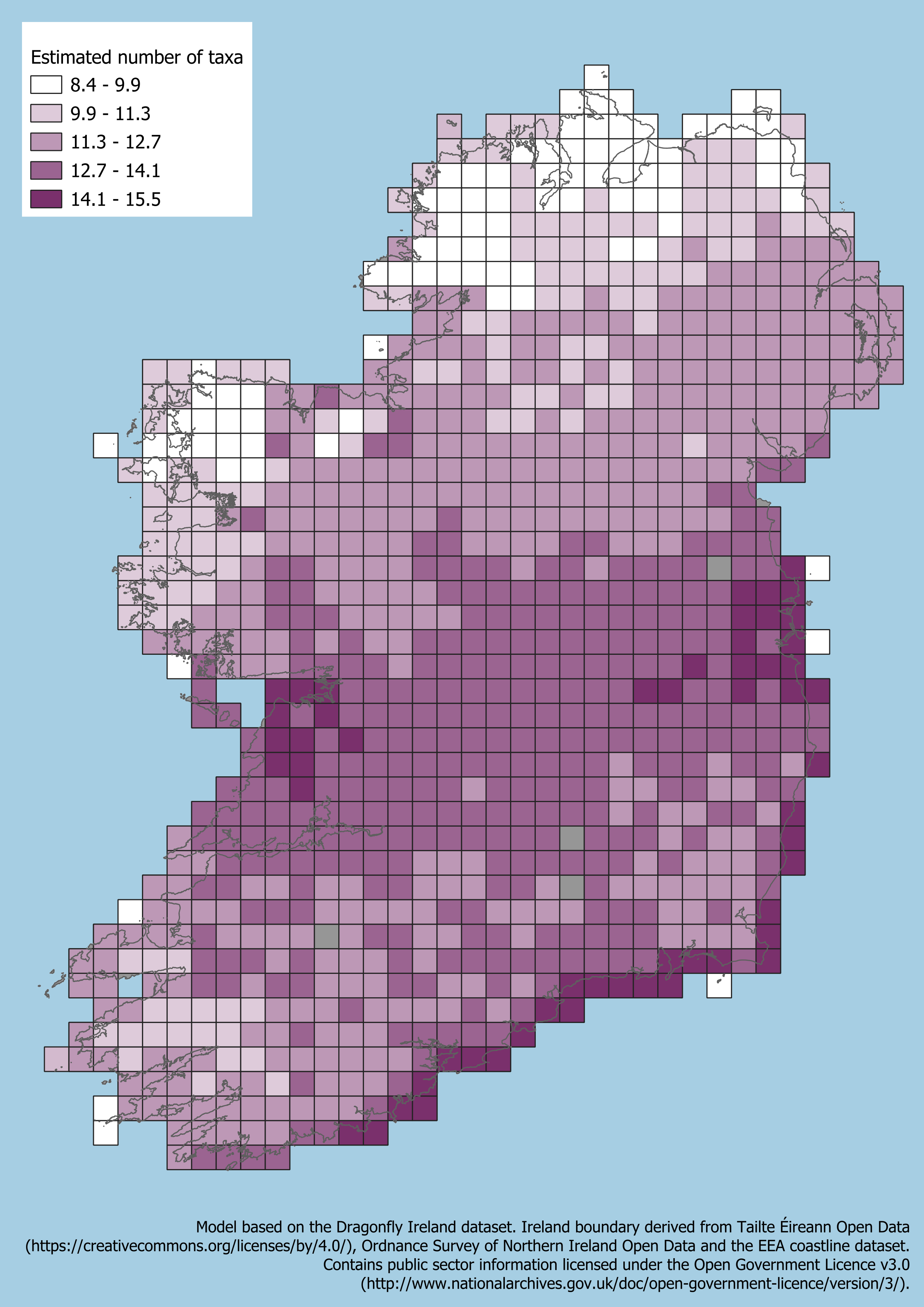
Frescalo estimated number of dragonfly and damselfly species per hectad in Ireland.
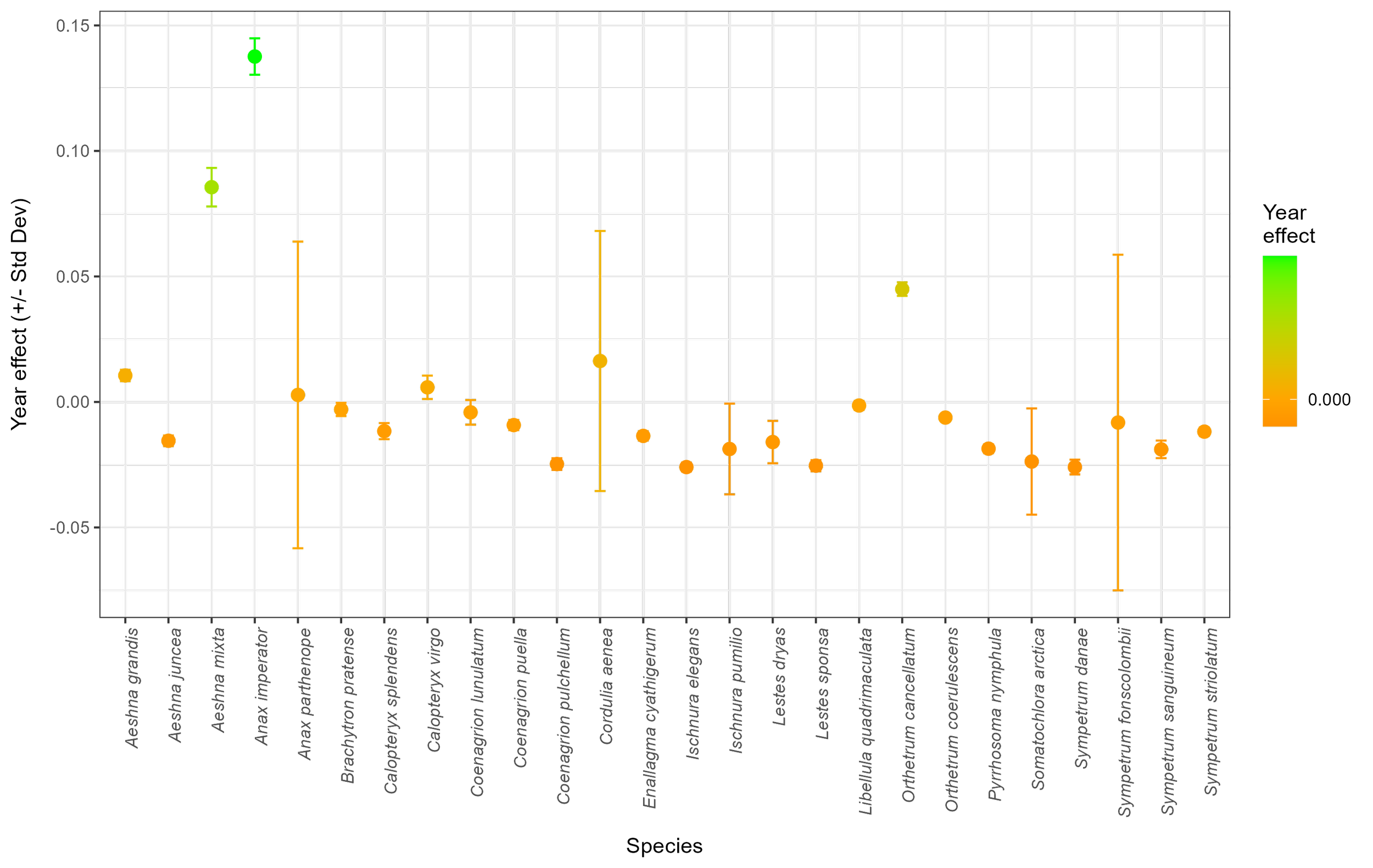
Year effect results for established species in the Dragonfly Ireland dataset analysed using a Reporting Rate Model.
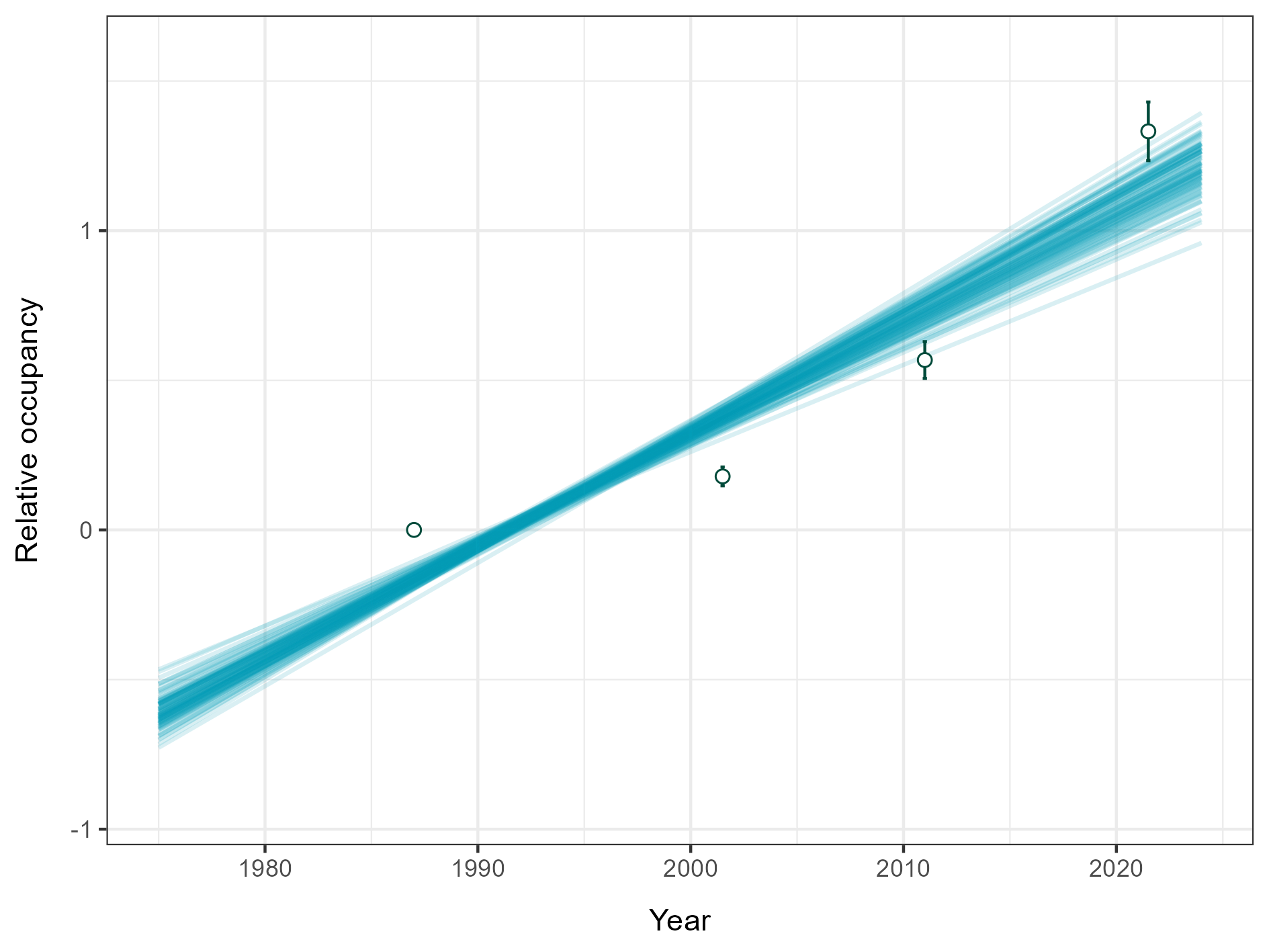
100 linear regression fits to Monte Carlo simulated relative Irish occupancy estimates for Migrant Hawker Aeshna mixta over four time periods, based on its Frescalo estimated means and standard deviations.
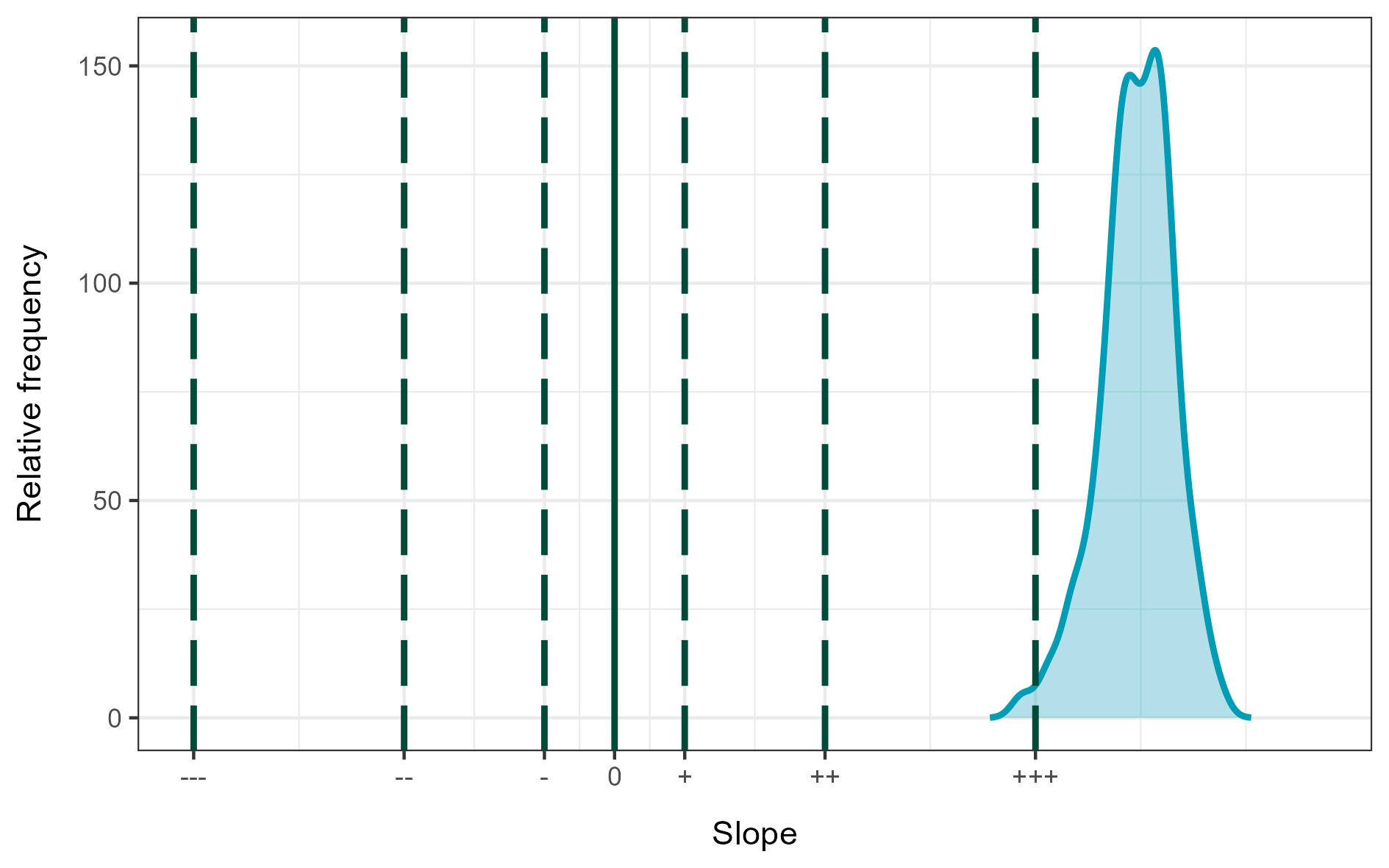
Density plot for the 100 linear regression slope estimates for Migrant Hawker Aeshna mixta.
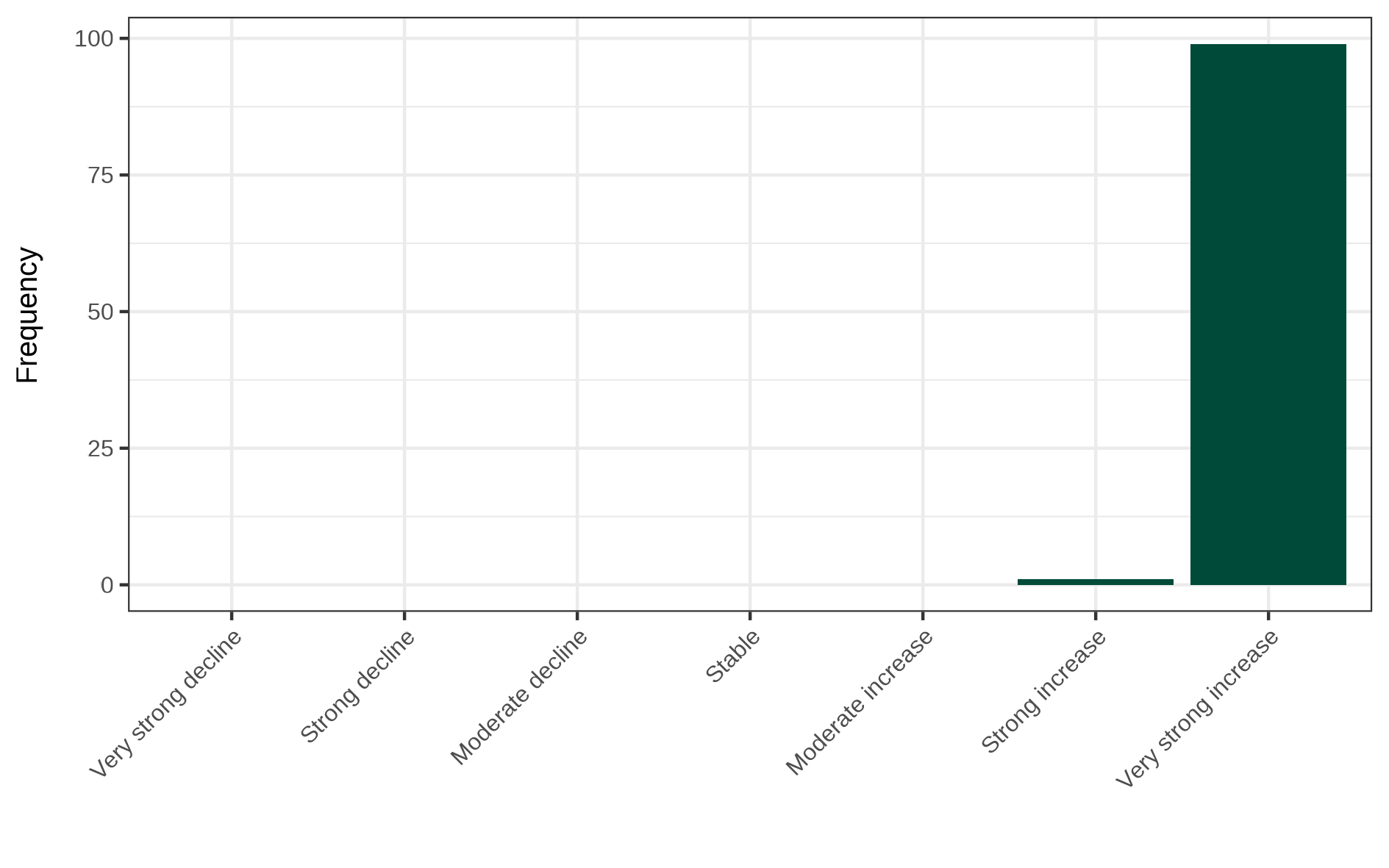
Bar plot of slope magnitude frequencies for Migrant Hawker Aeshna mixta, based on the distribution of the 100 simulated linear regression estimates.
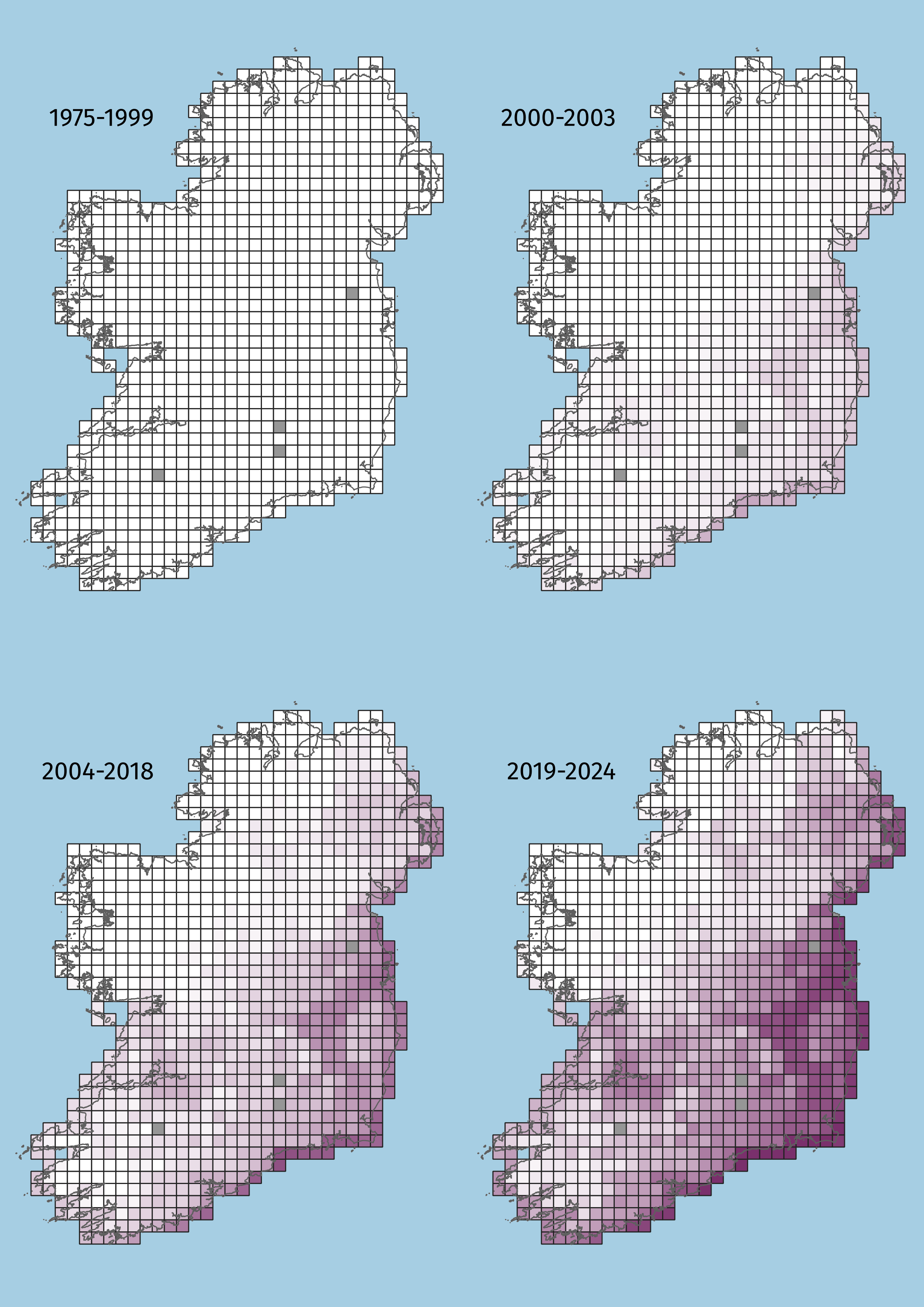
Frescalo predicted Irish hectad occupancies of Migrant Hawker Aeshna mixta in four time periods.
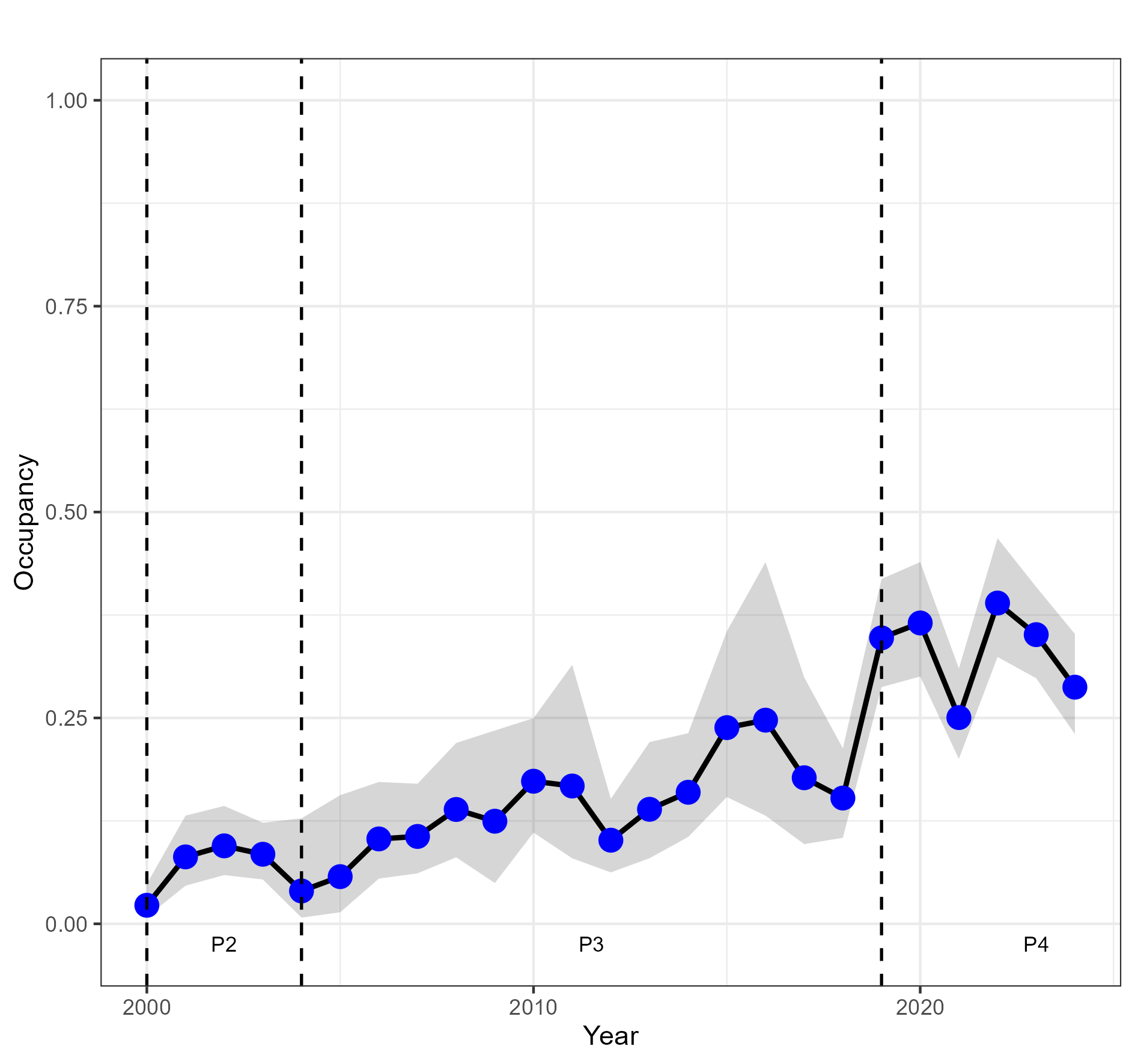
Plot of the Occupancy Model for Migrant Hawker Aeshna mixta after 10,000 iterations showing range change across three time periods since colonisation.

Simplified summary of the bar plot of slope magnitude frequencies for Migrant Hawker Aeshna mixta.